
Bewilderment
"An orientation towards wonder is absolutely necessary." Kaveh Akbar

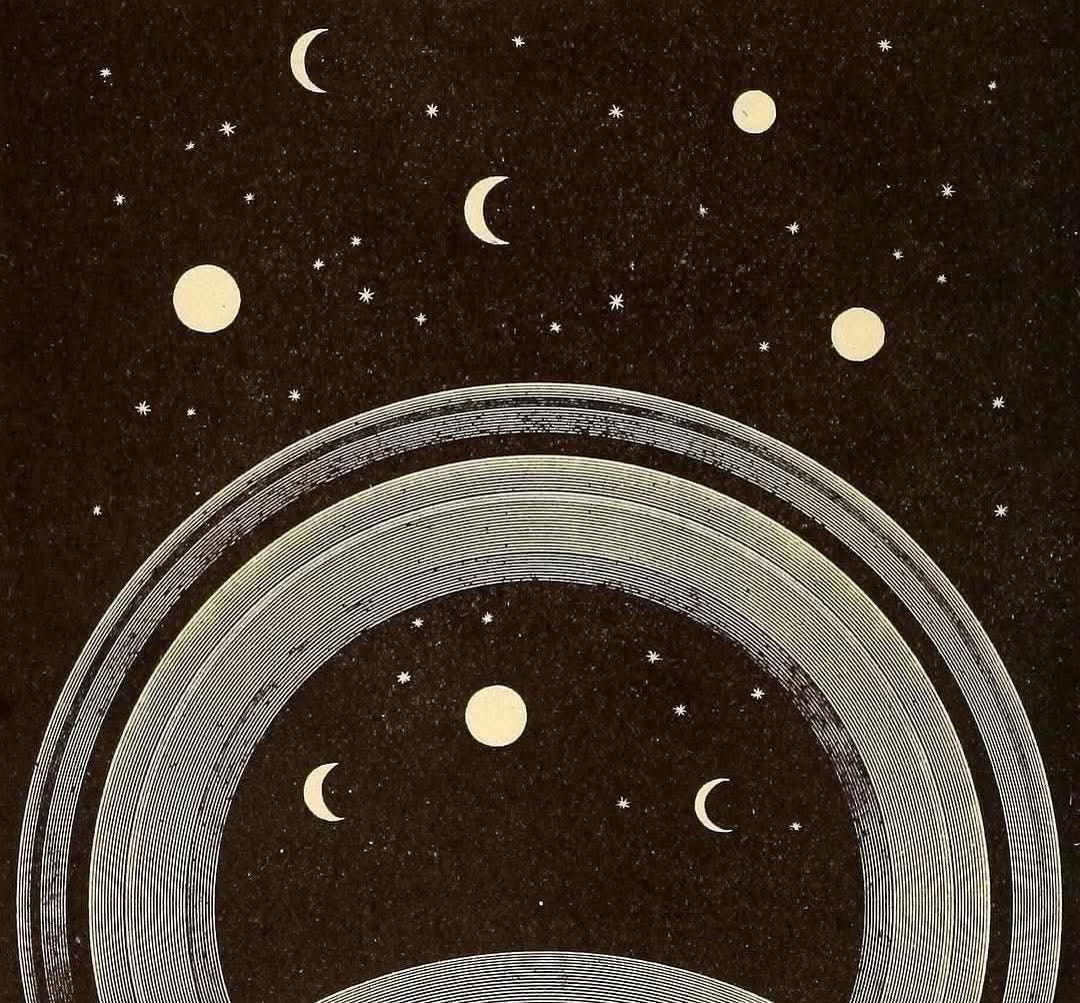
(llustration from "The Story of the Sun, Moon, and Stars" by Agnes Giberne)
We live in very bewildering times. Yet we don’t like to be bewildered. We like certainty. We like assurances. We like safety. We like answers. After all, to be bewildered is to be perplexed and confused. It is to be puzzled. And why should we be when we can just Google answers on our very smart phones. So much information in the very palm of our hands.
And yet…
The other morning, I opened my collection of poems by the 13th century Persian Sufi poet and mystic, Rumi. I read:
Sell your cleverness and
buy bewilderment.
Cleverness is skepticism.
Bewilderment is vision.
That’s not exactly how we see bewilderment. We want understanding not misunderstanding. There is an insecurity about uncertainty. I think of my own Father who suffers from dementia and how often he is perplexed and confused as more and more slips from his mental grasp. And seeing him this way is unsettling to me in the fear that, perhaps, I, too, might end up this way lost in the fog of my own mind.
As I get up early, gaze out at a blazing orange sun and sky. Birds moving about the feeders in my garden. I fix my coffee and ruminate on Rumi. I think of how we are bombing the very land he came from. I think of this poet born over 800 years ago and of his ecstatic poems. I think of how he travelled over 2,500 miles in his lifetime. I think of how, each year on the anniversary of his death, reverent followers visit his tomb and have a whirling dervish ceremony to honor the poet.
But more than that, I think of the words I read. “Sell your cleverness and buy bewilderment. / Cleverness is skepticism. / Bewilderment is vision.”
How did Rumi come to such a conclusion?
At the age of 37, Rumi, who was a Muslim scholar and theologian, when he encountered a wandering mystic known as Shams of Tabriz. They not only became friends, Rumi became his disciple. It was then that he began to write over 5,000 poems. Rumi began to incorporate poetry, music and dance into his religious practice. As he himself wrote, “I used to recite prayers. Now I recite rhymes, poems and songs.” He let go of rigid beliefs and began to embrace the nature of ecstasy and devotion, poetry and movement in a desire to draw closer to the divine.
When I reread his lines in considering Rumi’s life, I see him calling each of us to abandon rigid intellect, ego and mere opinions to embrace a state of wonder, invitation and openness. It’s as if I can here him speaking through the centuries to say, “Stop being certain. Instead be amazed.”
His use of bewilderment is not one of a state of confusion, but one of wonder - a state of intense awe, enchantment and amazement that overwhelms normal comprehension. It’s the kind of state that Einstein spoke of as bewildered awe that is essential to creativity and scientific discovery. It’s a way of experiencing the mysterious not in fear or uncertainty but with startling poetic wonder. In what the Iranian poet Kaveh Akbar describes as the “poetics of bewilderment” as a way to come in contact with the ecstatic sublime. He even states that “bewilderment is at the core of every poem.”
All of this puts me in mind of my beloved Saint Emily (Dickinson) who wisely wrote, “The soul should always stand ajar, ready to welcome the ecstatic experience.”
She, like Rumi, understood what it meant to be lost in the wonder of being. She experienced moments of intense moments of joy and anguish of what she calls “each ecstatic instant.” She was someone who left her “soul ajar” to experience the beauty and wonder with her receptive heart and soul. Whether that beauty come from her garden, birds, or her intense passion, especially for Susan Gilbert. For Dickinson, she found the ecstasy in “the mere sense of living” in all of its complexness.
How then do we enter such bewilderment and into such ecstatic experience?
By letting go of our unbending dogmas, beliefs, and ideas. To open ourselves up to curiosity as a preamble to wonder. It’s Rilke’s call to embrace uncertainty and live the questions. It’s abandoning easy answers and allowing our soul to stand ajar to all of life: both the joy and the anguish, those two paradoxes and tensions that we must hold in each moment. It is awe over analysis. It is allowing for not understanding and not having an answer. Rumi’s bewildered is a recognition of the sacredness of the everyday (something one sees in Dickinson’s poetry, too).
This is one of the reason that I am guided by poets and not politicians, especially these days. Poets grasp the the intensity of each fleeting moment in the beauty and brevity of our complex existence. It is to say, as Mary Oliver once did, “When it’s over, I want to say: all my life I was a bride married to amazement.”
This requires of us. This asks of us to free ourselves from ego to embrace the unknown and our own not understanding. It is to pay attention and be present. To see through our own eyes and not those given to us throughout out lives by others, especially those figures of authority. To see, truly see, with eyes of wholeness and integrity and kindness.
The poet Walt Whitman wrote:
This is what you shall do; Love the earth and sun and the animals, despise riches, give alms to every one that asks, stand up for the stupid and crazy, devote your income and labor to others, hate tyrants, argue not concerning God, have patience and indulgence toward the people, take off your hat to nothing known or unknown or to any man or number of men, go freely with powerful uneducated persons and with the young and with the mothers of families, read these leaves in the open air every season of every year of your life, re-examine all you have been told at school or church or in any book, dismiss whatever insults your own soul, and your very flesh shall be a great poem and have the richest fluency not only in its words but in the silent lines of its lips and face and between the lashes of your eyes and in every motion and joint of your body.
Re-examine all you have been told.
This is the first step towards bewilderment, towards the ecstatic.
May we all sell our cleverness and buy bewilderment.
Wonderful post this morning. Thank you.
"Awe over analysis" Three words. A heart full of words that say so much. I will be using this as a journal prompt! Thank you for this post!