
Grief
“No one ever told me that grief felt so like fear.” C.S. Lewis

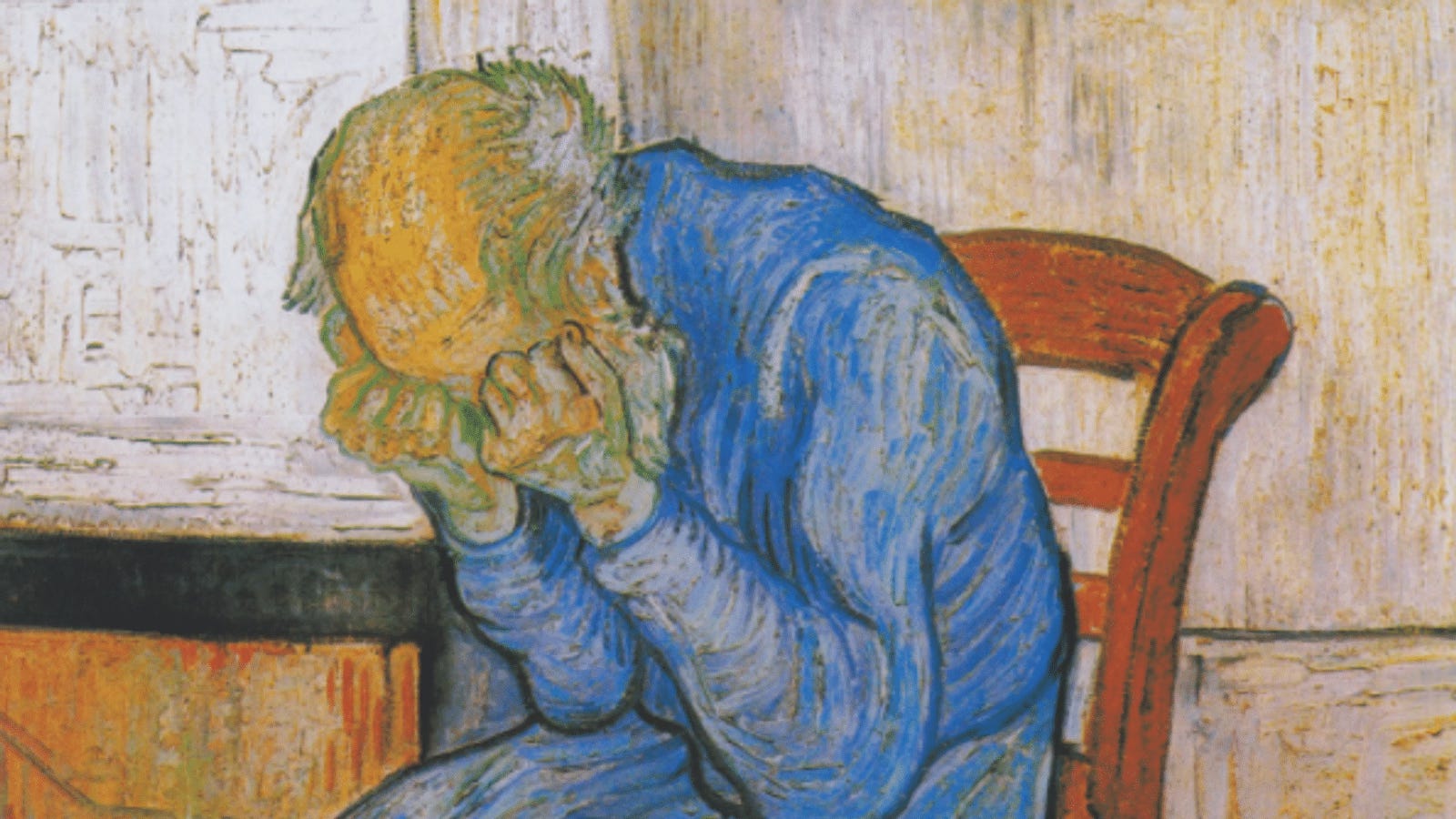
Sometimes it is a far more difficult thing to mourn the living than it is to mourn the dead. When I was young and my Mother died, I thought it would be the worst thing I would suffer. I wailed like a wounded animal. It was primal. Sorrow took over completely.
My Father, unable to process his own grief, took us to the beach so that he could look for a condo to buy. I remember us walking along the cold, December shore. Wind came up off the ocean as the waves broke upon the sand. I felt hollow and gutted and filled with sorrow and anger and fear. How does one live one’s life when a vital part of one’s story, one’s identity, one’s DNA is now gone?
I needed to feel something other than this overwhelming sense of loss. To everyone’s surprise, I took off my shoes and socks, rolled up my pants’ legs and step into the frigid waters. When I did, my body felt the shock of the freezing water against my skin. Yet that cold put me in my body in a way nothing else could have. I felt something other than grief for a moment. I felt the cold, power of the ocean from whence we all came and would be here long after our complex species is gone. It was a reminder that life would go on. The ocean reminded me of something greater and far more lasting than my grief or the finitude of my own life.
It was only recently that I reflected on my Father’s taking us to the beach. I had always been angry at him for doing so. You cannot replace someone with a new vacation place. It was him, once again, not facing his own emotions and loss and grief. Yet, I have begun to wonder, if, in his own subconscious way, he did so to return to the place where he and my Mother met at a dance. It was at a place that wasn’t so far from where we were walking along the shore that day. I don’t even know if he realized it. Perhaps he did. Perhaps it was also because my Mother loved the beach.
Who knows?
We all process grief and mourning differently.
Still, I did not even know then that there was a deeper grief. The grief of mourning the living, of mourning my own son who would rather live on the street than in my house. That my own love was limited and powerless in the face of his decision. That when he was gone, I sobbed so uncontrollably that I found it difficult to breathe. The fear that I may never see him again or that the next time I saw him would be when I had to go and identify his body.
Grief is complex. I grieve the child he once was. I grieve the sorrow, anger and loneliness that drives him. I grieve that no amount of care and love come overcome this - at least for the present. I grieve the destructiveness of his choices and his actions. I grieve for his own unprocessed suffering and sorrow.
We all are inflicted with what Patti Smith calls the “sacred wounds of grief.”
I love that she calls these wounds of grief “sacred.” Grief can be a transformative. It is not something to be fixed or avoided, but is a holy journey of love and loss, ritual and reverence and for that which we have lost: be it a loved one who’s died, loss of good health, loss of a job, loss of our ideals, the continual loss of the natural world, loss of a relationship or the life we thought we would live.
Yet when we see grief as a sacred passage, a spiritual path it becomes a way of not only journeying inward and learning more about our own inner strength, but a way of finding deeper connection to those around us through the empathy that all of us are, in some way, grieving.
Grief is about connection since it is rooted in love. I grieve my Mother and my younger son because I love them. And love is eternal.
Love is energy, just as music is, and energy is eternal. I believe that we, too, do not die. I do not know, exactly, what happens to us after we die, but I do not believe death is final. Perhaps we become a part of that energy that is love, that is music. Perhaps we become one and there is no longer “I” and “You” only “We” within the great mystery itself.
I am reminded of what the Little Prince tells the aviator in Antoine de Saint-Exupéry’s exquisite book, “And when your sorrow is comforted (time soothes all sorrows) you will be content that you have known me. You will always be my friend. You will want to laugh with me. And you will sometimes open your window, so, for that pleasure . . . And your friends will be properly astonished to see you laughing as you look up at the sky! Then you will say to them, 'Yes, the stars always make me laugh!' And they will think you are crazy. It will be a very shabby trick that I shall have played on you...”
For in grief, there is also laughter and other emotions. Sorrow can be soothed, but grief is always with us. There are years when, as I approach the anniversary of my Mother’s death or birthday, and it brings me joy to have known and loved her and to have been known and loved by her. So much of who I am is shaped by her, including my great love of reading and language. Then there are seasons when that grief hits me like the violent waves of a stormy ocean, so much so that I can barely catch my breath, where tears stream down my face or I feel a grief beyond tears.
Yet grief is a part of the beauty and brevity of our short existence here on Earth.
The important thing with grief, as with all things, is to be fully present to it. Don’t deny or avoid it. Do not pretend that it is not there. Listen to your body, your emotions. Honor the feelings, the emotions, that which you are grieving.
In his thought-provoking seminal book, The Wild Edge of Sorrow: Rituals of Renewal and the Sacred Work of Grief, Francis Weller writes, “My daily practice is to wake and immediately bring my attention to this thought: “I am one day closer to my death. So how will I live this day? How will I greet those I meet? How will I bring soul to each moment? I do not want to waste this day.”
This is not some existential practice. Not some doom and gloom pessimism. No, this is the realization that our lives are short, our time here precious, and focusing on how we will approach this life, this grief, this time we have and forming deeper connections.
As long as we love, we will grieve and that is, indeed, beautiful and sacred.
Elliott, I hardly know what to say. So unspeakably painful. I hold you and your beautiful boy in the light, trusting in a love that is embracing both of you and everyone in your family and your wider circle. 💙 Thank you for sharing this with us.
This was beautiful. We all carry sacred griefs with us and I think this article will help anyone who needs to guide these wounds towards something better.